

As a supplier of glass edge polishing wheels, I've often been asked an intriguing question: Can a glass edge polishing wheel be used on other materials besides glass? This question opens up a world of possibilities and challenges in the field of material processing. In this blog, I'll explore this topic in depth, drawing on my experience and knowledge of these specialized tools.
Understanding Glass Edge Polishing Wheels
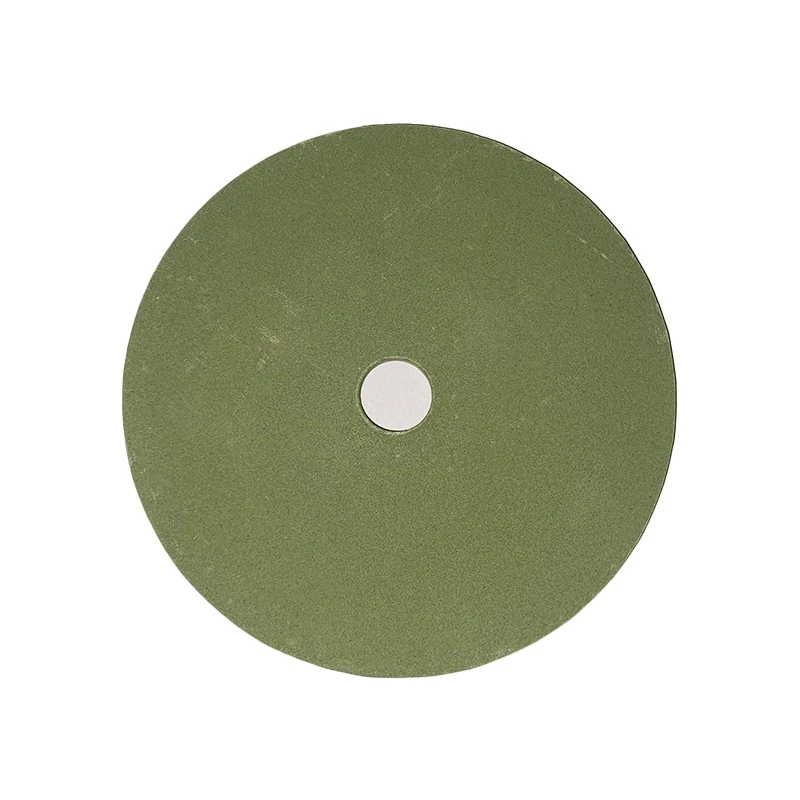
Before delving into their potential use on other materials, it's essential to understand what glass edge polishing wheels are. These wheels are designed specifically to smooth, shape, and polish the edges of glass. They come in various types, including bonded abrasive wheels, diamond - impregnated wheels, and resin - bonded wheels, each with unique properties suited for different glass - processing tasks.
The abrasive materials used in glass edge polishing wheels, such as diamond, silicon carbide, and aluminum oxide, are carefully selected for their hardness and cutting ability. Diamond, for example, is one of the hardest materials known, making it ideal for cutting and polishing hard and brittle materials like glass. The design of the wheel, including its shape, grit size, and bonding agent, is optimized to provide a high - quality finish on glass surfaces.
Potential for Use on Other Materials
Ceramics
Ceramics share some similarities with glass in terms of their hardness and brittleness. They are often used in applications where high heat resistance, chemical stability, and wear resistance are required, such as in the manufacturing of tiles, pottery, and electronic components. Glass edge polishing wheels can be effective in polishing ceramic materials. The hard abrasive particles in the wheels can cut through the ceramic surface, removing any rough edges and providing a smooth finish. However, ceramics can be more porous than glass, which may require a different approach to prevent clogging of the wheel. For instance, using a wheel with a more open structure or a coolant to flush away the debris can help maintain the wheel's cutting efficiency.
Stone
Natural stones like granite, marble, and quartzite are commonly used in construction and decorative applications. These materials are also hard and brittle, similar to glass. Glass edge polishing wheels, especially those with diamond abrasives, can be used to polish stone surfaces. Diamond - impregnated wheels can effectively grind and polish the stone, enhancing its natural beauty and luster. However, stone has a different mineral composition compared to glass, and its hardness can vary significantly depending on the type of stone. For example, granite is generally harder than marble, so a wheel with a coarser grit may be needed for initial grinding on granite, followed by a finer - grit wheel for the final polish.

Composites
Composite materials are made by combining two or more different materials to achieve specific properties. Some composites, such as fiberglass and carbon fiber composites, have a hard outer layer that can be polished using glass edge polishing wheels. These wheels can be used to smooth the edges of composite parts, removing any rough edges left from the manufacturing process. However, composites often have a layered structure, and the polishing process needs to be carefully controlled to avoid delamination or damage to the underlying layers.
Limitations and Considerations
Material Compatibility
Not all materials are suitable for polishing with glass edge polishing wheels. Soft materials like wood, plastics, and rubber are not good candidates because the abrasive particles in the wheels may cause excessive damage or tearing. The hardness of the material being polished should be similar to or greater than the hardness of the glass to ensure effective cutting and polishing.
Wheel Wear
Using glass edge polishing wheels on materials other than glass can lead to increased wheel wear. Different materials have different abrasion characteristics, and some may be more abrasive than glass, causing the wheel to wear out more quickly. This can increase the cost of the polishing process, as the wheels need to be replaced more frequently. Additionally, the wear pattern of the wheel may be different when used on non - glass materials, which can affect the quality of the finish.
Surface Finish Requirements
The surface finish requirements for different materials may vary. Glass typically requires a high - gloss, scratch - free finish, while other materials may have different aesthetic or functional requirements. For example, stone may be polished to a satin or matte finish, which may require a different polishing process or a different type of wheel.
Our Product Offerings for Different Materials
At our company, we understand the diverse needs of our customers. We offer a range of glass edge polishing wheels that can be adapted for use on other materials. For example, our Glass Groove Wheel Polish can be used on both glass and ceramic materials. Its unique design allows for precise polishing of grooves and edges, making it suitable for various applications.
Our Durable V Shaped Polishing Wheel is another versatile option. The V - shaped design provides enhanced contact with the material surface, making it effective for polishing both glass and stone. It can be used to create a smooth and uniform finish on different materials, whether it's a glass tabletop or a stone countertop.
The BD Grinding Wheel is a high - performance wheel that can be used for both glass and composite materials. Its advanced bonding technology ensures long - lasting performance and consistent cutting ability, even when used on challenging materials.
Conclusion
In conclusion, glass edge polishing wheels have the potential to be used on other materials besides glass, such as ceramics, stone, and composites. However, careful consideration must be given to material compatibility, wheel wear, and surface finish requirements. By understanding the properties of different materials and selecting the appropriate wheel, it is possible to achieve high - quality polishing results on a variety of hard and brittle materials.
If you are interested in exploring the use of our glass edge polishing wheels for your specific material - processing needs, we invite you to contact us for more information. Our team of experts can provide you with detailed advice on the best wheel for your application and help you achieve the desired results.
References
- "Handbook of Abrasive Technology" by R. L. King
- "Materials Science and Engineering: An Introduction" by William D. Callister, Jr. and David G. Rethwisch
- "Ceramics: Processing and Applications" by J. Reed