

As a reputable glass polishing powder supplier, I understand the critical importance of ensuring the purity of our products. The purity of glass polishing powder directly impacts its performance, effectiveness, and the quality of the glass it polishes. In this blog post, I will share some common methods for testing the purity of glass polishing powder, which can help both us as suppliers and our customers maintain high - quality standards.
1. Chemical Analysis
1.1 Inductively Coupled Plasma - Mass Spectrometry (ICP - MS)
ICP - MS is a powerful analytical technique that can accurately determine the elemental composition of glass polishing powder. It works by ionizing the sample in a high - temperature plasma and then separating and detecting the ions based on their mass - to - charge ratio. This method can detect trace elements in the parts - per - billion (ppb) range, making it extremely sensitive.
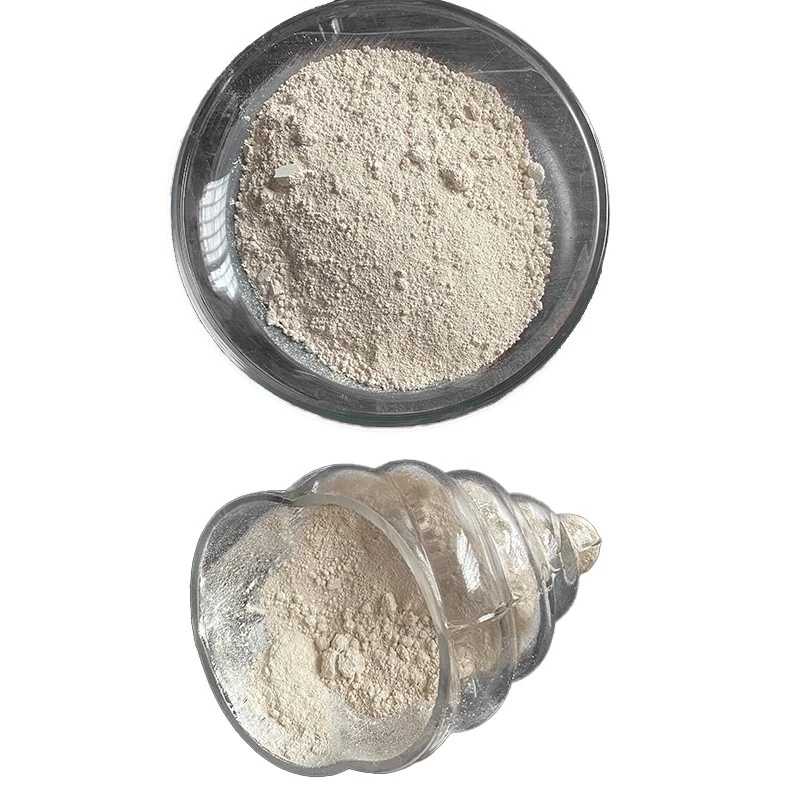
For glass polishing powder, ICP - MS can be used to identify impurities such as heavy metals (e.g., lead, mercury, cadmium), which are not only harmful to the environment but can also affect the polishing performance. By analyzing the elemental profile, we can ensure that the powder meets the required purity standards. For example, in the production of Flat Glass Polishing Powder, a low level of impurities is crucial to achieve a smooth and scratch - free finish on flat glass surfaces.
1.2 X - ray Fluorescence (XRF)
XRF is a non - destructive analytical technique that can quickly and accurately determine the elemental composition of a sample. When the sample is irradiated with X - rays, the atoms in the sample emit characteristic fluorescent X - rays. By measuring the energy and intensity of these fluorescent X - rays, we can identify and quantify the elements present in the glass polishing powder.
XRF is particularly useful for on - site or rapid testing. It can provide a semi - quantitative analysis of the major and minor elements in a short time. For instance, in our quality control process, we can use XRF to quickly check the purity of a batch of Cerium Oxide Glass Polish before it is shipped to the customers. This helps us ensure that the product contains the correct amount of cerium oxide and has a low level of impurities.
2. Physical Property Testing
2.1 Particle Size Analysis
The particle size of glass polishing powder is a crucial factor that affects its polishing performance. A uniform particle size distribution is desirable for consistent polishing results. We can use techniques such as laser diffraction to measure the particle size distribution of the powder.
In laser diffraction, a laser beam is passed through a suspension of the powder particles. The particles scatter the laser light, and the scattering pattern is detected and analyzed to determine the particle size distribution. By comparing the measured particle size distribution with the specified range, we can assess the purity of the powder. If the particle size distribution is outside the acceptable range, it may indicate the presence of agglomerates or impurities that can affect the polishing quality. For example, in the case of Glass Repair Powder, a well - controlled particle size is necessary to effectively fill and polish small scratches on glass surfaces.

2.2 Density Measurement
The density of glass polishing powder can also provide information about its purity. Different substances have different densities, so any deviation from the expected density of the pure glass polishing powder may indicate the presence of impurities.
We can use a pycnometer to measure the density of the powder accurately. A pycnometer is a small, precisely calibrated container that can hold a known volume of the powder. By weighing the powder in the pycnometer and calculating its density, we can compare it with the standard density of the pure product. If the measured density is significantly different from the standard, further analysis may be required to identify the source of the impurity.
3. Spectroscopic Analysis
3.1 Fourier Transform Infrared Spectroscopy (FTIR)
FTIR is a technique used to identify chemical bonds in a sample by measuring the absorption of infrared light. Different chemical functional groups absorb infrared light at characteristic frequencies, allowing us to identify the compounds present in the glass polishing powder.
In the context of glass polishing powder, FTIR can be used to detect organic impurities or unwanted chemical compounds. For example, if there are organic contaminants in the powder, they will show characteristic absorption peaks in the FTIR spectrum. By comparing the spectrum of the sample with the spectrum of a pure reference sample, we can determine the presence and amount of impurities.
3.2 Raman Spectroscopy
Raman spectroscopy is another spectroscopic technique that can provide information about the molecular structure of a sample. It works by measuring the inelastic scattering of light by the molecules in the sample. Raman spectroscopy can be used to identify different crystal phases and chemical compounds in the glass polishing powder.
This technique is particularly useful for detecting impurities that have different crystal structures or chemical compositions from the main component of the powder. For example, in cerium oxide - based glass polishing powder, Raman spectroscopy can be used to detect the presence of other cerium compounds or impurities that may affect the polishing performance.
4. Thermal Analysis
4.1 Differential Scanning Calorimetry (DSC)
DSC measures the heat flow associated with physical and chemical changes in a sample as a function of temperature. By heating the glass polishing powder at a controlled rate, we can observe endothermic or exothermic peaks in the DSC curve, which correspond to phase transitions, decomposition, or other chemical reactions.
For glass polishing powder, DSC can be used to detect impurities that have different thermal properties from the main component. For example, if there are impurities with lower melting points, they will show an endothermic peak at a lower temperature than the main component. By analyzing the DSC curve, we can determine the purity and thermal stability of the powder.
4.2 Thermogravimetric Analysis (TGA)
TGA measures the change in mass of a sample as a function of temperature. By heating the glass polishing powder in a controlled atmosphere, we can observe the mass loss due to evaporation, decomposition, or other chemical reactions.
TGA can be used to detect volatile impurities or substances that decompose at different temperatures. For example, if there are organic impurities in the powder, they will typically decompose and cause a mass loss at relatively low temperatures. By analyzing the TGA curve, we can determine the amount of volatile impurities and the thermal stability of the powder.
Conclusion
Testing the purity of glass polishing powder is a multi - faceted process that requires a combination of chemical, physical, spectroscopic, and thermal analysis techniques. As a glass polishing powder supplier, we are committed to using these advanced testing methods to ensure the high quality and purity of our products.
Whether you are in the market for Glass Repair Powder, Cerium Oxide Glass Polish, or Flat Glass Polishing Powder, you can trust that our products meet the strictest purity standards. If you are interested in purchasing our glass polishing powder or have any questions about our products, please feel free to contact us for procurement discussions. We look forward to working with you to meet your glass polishing needs.
References
- Skoog, D. A., West, D. M., Holler, F. J., & Crouch, S. R. (2014). Fundamentals of Analytical Chemistry. Cengage Learning.
- Miller, J. M., & Miller, J. C. (2010). Statistics and Chemometrics for Analytical Chemistry. Pearson Education.
- Schrader, B. (2004). Infrared and Raman Spectroscopy: Principles and Spectral Interpretation. John Wiley & Sons.