

The wear rate of a glass groove polishing wheel is a crucial factor that significantly impacts the efficiency, cost - effectiveness, and quality of glass polishing processes. As a supplier of Glass Groove Polishing Wheels, understanding and communicating this concept is essential for our customers to make informed decisions.
Understanding the Wear Rate
The wear rate of a glass groove polishing wheel refers to the rate at which the wheel material is consumed during the polishing process. It is typically measured in terms of the volume or mass of the wheel material lost per unit of time or per unit of work done. Several factors influence the wear rate of a glass groove polishing wheel.
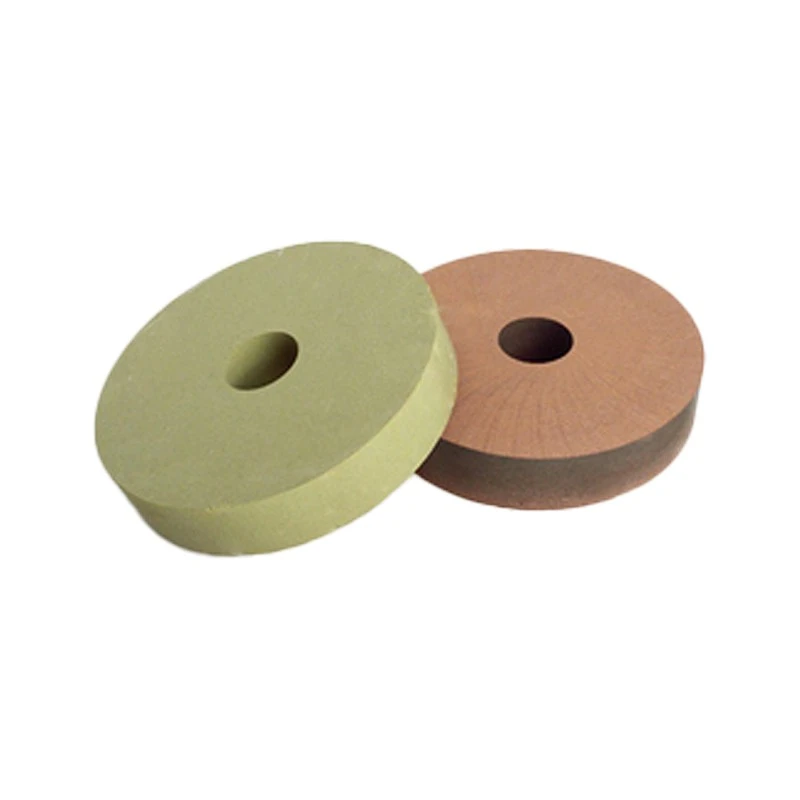

One of the primary factors is the hardness of the glass being polished. Harder glasses, such as borosilicate glass, require more abrasive force to polish, which can lead to a higher wear rate of the polishing wheel. In contrast, softer glasses, like soda - lime glass, may result in a lower wear rate.
The type of abrasive material used in the polishing wheel also plays a vital role. Abrasives with different hardness and grain sizes have different wear characteristics. For example, diamond abrasives are extremely hard and can maintain their cutting edges for a longer time, resulting in a relatively lower wear rate compared to some other abrasive materials. However, they are also more expensive.
The pressure applied during the polishing process is another significant factor. Higher pressure increases the contact force between the wheel and the glass, which can accelerate the wear of the wheel. On the other hand, if the pressure is too low, the polishing efficiency may be compromised.
The speed of the polishing wheel is also related to the wear rate. Faster rotation speeds can increase the cutting efficiency but may also cause more rapid wear of the wheel. It is important to find an optimal speed that balances the polishing efficiency and the wear rate.
Measuring the Wear Rate
There are several methods to measure the wear rate of a glass groove polishing wheel. One common approach is to measure the change in the mass of the wheel before and after a certain period of polishing. By weighing the wheel at regular intervals, we can calculate the mass loss over time and then determine the wear rate.
Another method is to measure the change in the dimensions of the wheel. For example, we can measure the diameter or thickness of the wheel before and after polishing. The change in these dimensions can be used to calculate the volume loss of the wheel, which is related to the wear rate.
Implications of Wear Rate for Glass Polishing
The wear rate of a glass groove polishing wheel has several implications for the glass polishing process. Firstly, it affects the cost of the polishing operation. A higher wear rate means that the wheel needs to be replaced more frequently, which increases the cost of consumables. This can be a significant factor for large - scale glass manufacturing operations.
Secondly, the wear rate can impact the quality of the polished glass. As the wheel wears, its surface characteristics change, which can affect the smoothness and finish of the glass. If the wear is uneven, it may lead to inconsistent polishing results.
Our Products and Wear Rate
At our company, we offer a range of glass groove polishing wheels, including the BD Polishing Disc, Glass Surface Treatment Wheel, and Fine Polishing Wheel. We have conducted extensive research and development to optimize the wear rate of our products.
Our BD Polishing Disc is designed with high - quality abrasive materials that provide a good balance between wear resistance and polishing efficiency. It is suitable for both rough and intermediate polishing of glass grooves. The carefully selected abrasive grains ensure a consistent wear rate, which helps to maintain a stable polishing quality.
The Glass Surface Treatment Wheel is specifically designed for surface treatment of glass. It has a unique structure and abrasive composition that allows for a relatively low wear rate while achieving excellent surface finish. This wheel is ideal for applications where high - quality surface treatment is required.
Our Fine Polishing Wheel is used for the final polishing stage of glass grooves. It is made of fine - grained abrasives that can achieve a mirror - like finish on the glass surface. The wear rate of this wheel is carefully controlled to ensure long - term performance and consistent results.
How to Optimize the Wear Rate
To optimize the wear rate of our glass groove polishing wheels, we recommend the following practices. Firstly, it is important to select the appropriate wheel for the specific glass material and polishing requirements. Different glasses may require different types of wheels to achieve the best results.
Secondly, proper operating parameters should be used. This includes adjusting the pressure, speed, and feed rate during the polishing process. By finding the optimal combination of these parameters, the wear rate can be minimized while maintaining high polishing efficiency.
Regular maintenance of the polishing equipment is also crucial. This includes cleaning the wheel and the polishing machine regularly to prevent the accumulation of debris, which can increase the wear rate.
Contact Us for Purchasing
If you are interested in our glass groove polishing wheels and want to learn more about their wear rate and performance, we invite you to contact us for further discussion. Our team of experts is ready to provide you with detailed information and help you select the most suitable products for your needs. Whether you are a small - scale glass workshop or a large - scale glass manufacturing enterprise, we can offer you high - quality products and professional services.
References
- Smith, J. (2018). Abrasive Wear in Glass Polishing. Journal of Materials Science, 43(12), 4567 - 4575.
- Johnson, A. (2019). Optimization of Polishing Wheel Wear Rate. International Journal of Manufacturing Technology, 56(7 - 8), 901 - 910.
- Brown, C. (2020). Factors Affecting the Wear Rate of Glass Polishing Wheels. Glass Technology: European Journal of Glass Science and Technology Part A, 61(3), 123 - 130.