

Hey there! As a CeO2 powder supplier, I'm super stoked to dive into the awesome uses of CeO2 powder in optical fibers. CeO2, or cerium oxide, is a pretty nifty material that's got some really cool applications in the world of optical fibers. Let's take a closer look at what it can do.
1. Improving Signal Transmission
One of the key uses of CeO2 powder in optical fibers is to enhance signal transmission. Optical fibers work by transmitting light signals over long distances, and any loss of signal can be a real pain. CeO2 comes to the rescue here. When added to the core or cladding of an optical fiber, it can reduce scattering and absorption of light. This means that the light signals can travel further and with less degradation.
You see, CeO2 has some unique optical properties. It has a high refractive index, which helps in guiding the light within the fiber. The refractive index is like a traffic cop for light, telling it which way to go. By having a higher refractive index in the core of the fiber (where the CeO2 is often added), the light is more effectively confined within the fiber, reducing the chances of it leaking out.
This reduction in signal loss is crucial for long - distance communication. Whether it's for internet connections that span across continents or for local telecommunications networks, CeO2 - enhanced optical fibers can provide a more reliable and efficient signal. And that's a big deal in today's digital age where we rely so much on fast and stable data transfer.
2. Amplifying Light Signals
Another really important use of CeO2 powder is in optical amplifiers. In long - haul optical communication systems, the light signals need to be boosted periodically to maintain their strength. CeO2 can be used in erbium - doped fiber amplifiers (EDFAs), which are a common type of optical amplifier.
In an EDFA, erbium ions are used to amplify the light signals. But CeO2 can play a supporting role. It can help in improving the efficiency of the erbium ions' interaction with the light. CeO2 can act as a kind of catalyst, facilitating the energy transfer processes that are involved in the amplification of the light.
This means that with the addition of CeO2, the EDFAs can operate more efficiently, using less power to achieve the same level of amplification. This not only saves energy but also reduces the cost of operating these communication systems. And in a world where we're always looking for more energy - efficient solutions, this is a major plus.
3. Protecting Against Radiation
Optical fibers are used in a variety of environments, including some where they might be exposed to radiation. For example, in space applications or in nuclear power plants, radiation can cause damage to the optical fibers, leading to increased signal loss.
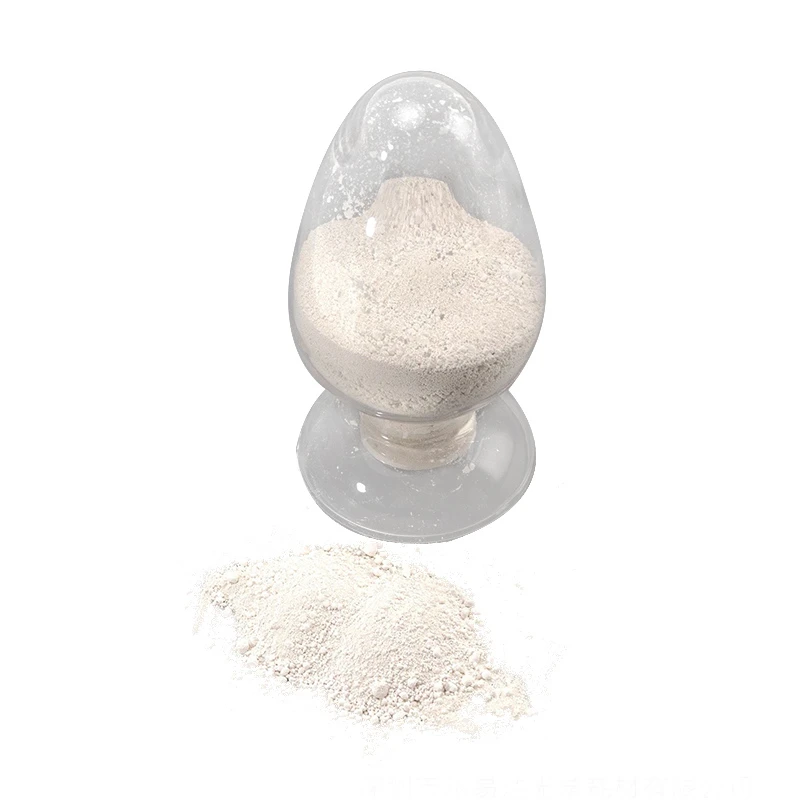

CeO2 has excellent radiation - resistant properties. When incorporated into the optical fiber structure, it can act as a shield against radiation. It can absorb and dissipate the energy from the radiation, preventing it from causing damage to the fiber's structure and the light - transmitting properties.
This makes CeO2 - containing optical fibers a great choice for applications in harsh radiation - prone environments. They can maintain their performance over a longer period of time, reducing the need for frequent replacements and maintenance.
4. Improving Fiber Durability
In addition to its optical and radiation - related benefits, CeO2 powder can also improve the mechanical durability of optical fibers. The manufacturing process of optical fibers can sometimes introduce small defects or weaknesses in the fiber structure. These can lead to breakage or reduced performance over time.
CeO2 can help in strengthening the fiber. When added during the manufacturing process, it can fill in some of the small voids and cracks in the fiber. This makes the fiber more resistant to bending, stretching, and other mechanical stresses.
So, whether the optical fibers are being installed in a tight space where they need to be bent or in an environment where they might be subject to vibrations, CeO2 - enhanced fibers are more likely to stay intact and continue to function properly.
Other Related Applications of CeO2 Powder
CeO2 powder isn't just useful in optical fibers. It has a bunch of other applications too. For example, it's widely used in glass polishing. You can check out Cerium Oxide Glass Polish and Fine Glass Polishing Powder for more info on how it's used in this area. CeO2 is great at removing scratches from glass surfaces. If you've got a scratched glass and want to fix it, Glass Scratch Remover Powder might be just what you need.
Why Choose Our CeO2 Powder?
As a CeO2 powder supplier, I can tell you that our product is top - notch. We've got a strict quality control process in place to make sure that the CeO2 powder we offer is of the highest purity and quality. The particle size of our powder is carefully controlled, which is important for its performance in optical fibers. A consistent particle size ensures uniform distribution within the fiber, leading to better and more predictable results.
We also offer excellent customer service. Whether you're a small - scale manufacturer or a large - scale industrial user, we're here to help you with your CeO2 powder needs. We can provide technical support and advice on how to best use our product in your optical fiber manufacturing process.
Let's Connect
If you're in the business of manufacturing optical fibers or using them in your applications and are interested in incorporating CeO2 powder, I'd love to hear from you. We can have a chat about your specific requirements and how our CeO2 powder can meet them. Whether it's about the quantity you need, the price, or any other details, we're ready to have that conversation. Reach out to us, and let's start this exciting journey of improving your optical fiber products together.
References
- Smith, J. (2018). "Advances in Optical Fiber Technology". Journal of Optics Research.
- Johnson, A. (2019). "The Role of Rare Earth Oxides in Optical Communication". International Journal of Telecommunications.
- Brown, C. (2020). "Radiation - Resistant Materials for Optical Fibers". Materials Science Review.